

PAT Emergency Support: Top 10 Tips in Warwick
Emergency assistance for Portable Appliance Testing is provided in emergency situations where electrical equipment failures present immediate risks and cannot wait until maintenance schedules are scheduled. The emergency services do not employ a planned, risk-based approach as routine PAT testing. Instead they are able to respond immediately to events such as near-misses electrical shocks and appliance fires. The Electricity at Work Regulations of 1989, as well as the Health and Safety at Work Act of 1974 require employers to take immediate action to minimize serious and imminent danger. This makes reliable PAT support for emergencies a crucial part of risk management. The quality of this emergency response–measured by availability, technician competence, and action effectiveness–directly impacts workplace safety, regulatory compliance, and potential liability. It is vital to examine the emergency response capabilities of an organization that provides services. This includes their response plan and the technical resources available, as well as a track record that has been proven to be able to handle high-pressure situations.
1. 24/7/365 Availability with Dedicated Emergency Contact Protocols in Warwick
Genuine emergency support requires uninterrupted access to dedicated contact channels that are separate from normal business lines. It is usually an emergency hotline supervised by a coordinator available 24/7, including weekends, holidays, and nights. The service provider should define the procedure for handling calls, which includes maximum callback periods (e.g. 30 minutes) and escalated processes. If there is no designated number for emergencies, or evidence that calls go to voicemail during not during business hours, customers are at risk of electrical accidents.
2. The Guarantees of Emergency Response Times – Clearly Definable in Warwick
The providers should provide the range of time needed to respond depending on the severity of the risk. For instance the priority 1 (Imminent danger): Site attendance within 2-4 hours of incidents involving electric shock or fire emission. Priority 3 (Urgent Faults) is attendance for 24 hours in the case of critical faults discovered during audits or failures to operate safety-critical systems. These assurances should be provided specifically in service level agreements that include explicit consequences if targets are not met. For instance the service credit or penalties clauses.
3. Technical Competency Requirements for Responders
Emergency technicians must have more qualifications and experience than normal testers. They should hold advanced certifications (City and Guilds 2377) along with additional education in diagnostics of faults, forensic investigation and safe isolation techniques (GS38). It is ideal that they receive an electrical engineering degree, which will allow the ability to recognize complex issues beyond the standard test procedures. They should also show that their emergency teams regularly take part in training exercises.
4. Emergency Services: Isolation, Certification, and Investigation in Warwick
Comprehensive emergency assistance includes three phases. Immediate Investigation to determine the root cause and Safe Isolation, which includes advice regarding quarantining affected areas; and finally, formal Certification that provides evidence of the actions taken to be used for insurance purposes and for compliance. The service should also contain an extensive emergency report detailing the incident as well as the findings and suggestions for corrective measures. This is a crucial document for HSE investigation or in insurance claims.
5. Resources and equipment are available in case of emergency in Warwick
Emergency response vehicles are mobile workshop that must be stocked with: testing equipment for calibration, spare parts (plugs fuses cables) along with spare appliances, and tools to repair critical equipment. The goal is to ensure that technicians are able to resolve most emergencies during the initial visit instead of simply identifying problems requiring subsequent visits, leaving hazardous situations unresolved.
6. Integration with the Incident Reporting System and RIDDOR Considerations in Warwick
Professional emergency personnel are aware of the legally binding reporting requirements in the Reporting of Injuries and Dangerous Events Regulations (RIDDOR). They must assist customers in determining if an electrical incident qualifies as a reportable hazardous event (e.g. an electrical short circuits that can cause fire or explosion) and also provide evidence of technical nature to aid in the reporting process. This advisory role is crucial to support in times of emergency and aids dutyholders to meet their legal obligations when major electrical safety events occur.
7. Post-Emergency System Review and Preventative Recommendations in Warwick
After emergency resolution, the organizations should conduct a formal review to identify underlying causes and systemic weaknesses. This may include analysing if current risk assessments or testing frequency are appropriate, recommending modifications to maintenance plans, as well as identifying trends across various types of equipment or Warwicks. This proactive approach turns the emergency response from reactive to an opportunity for strategic improvement that could prevent recurrence, as well as strengthening the overall safety management system.
8. Communication Protocols in the event of an emergency in Warwick
It is crucial to adhere to the clearly defined protocol of communication in times of extreme pressure. The provider must ensure confirmation of initial contact within 15 minutes, prompt notification of dispatch by technician with ETA the day of arrival, confirmation on-site and announcing preliminary findings within an hour. In the 24 hours following resolution, an extensive emergency report must be released. The meeting should be a discussion of findings and prevention strategies.
9. Transparency in the pricing for emergency Callout Services in Warwick
In order to avoid misunderstandings in times of crisis, it's crucial that emergency pricing be clarified in advance. Contracts must clearly define the following: emergency callout charges (typically PS150-3000), hourly rates of urgent work (often 1.5-2x regular rates), part pricing as well as premiums for late-night emergency response. Clear pricing structures can help avoid financial shocks in times of need and allows duty holders making urgent work-related decisions to make informed choices.
10. Documentation and Evidence Preservation in Legal Proceedings in Warwick
Most emergency situations carry legal consequences. Technicians must be trained in evidence preservation, including photographic documentation of malfunctioning conditions, safe storage of components that fail, and detailed contemporaneous note-taking. The report that is generated must be forensically solid. It must accurately record the condition of equipment prior to intervention as well as the actions implemented. Have a look at the top rated compliance services in Warwick for website advice.
Top 10 Tips For The Range Of Services Available For Fire Extinguishers Servicing in Warwick
It's more complex than simply finding someone to do an annual inspection when you choose the right UK fire extinguisher service provider. A comprehensive service provider provides an array of services and is the primary source of contact when it comes to all of your fire safety products. They ensure compliance, cut down on the burden of administration, offer a holistic approach to safety and offer an comprehensive service. The scope of services can be a good indicator of the expertise and resources of a company, as well as their dedication to becoming an established partner rather than simply a contracting business. Knowing the entire range of services, from initial risk assessment, installation and ongoing maintenance to emergency support to end-oflife disposal allows you to select a company that is safe and efficient.
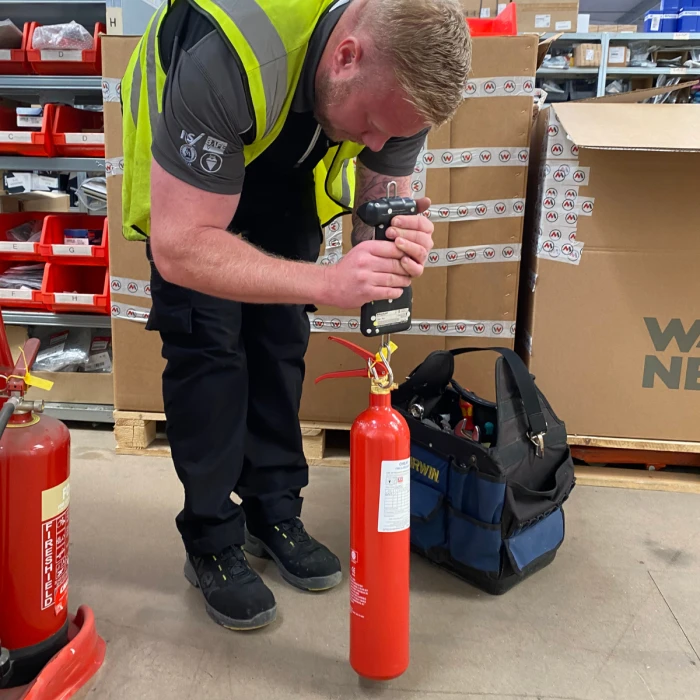
1. Routine Maintenance and Scheduled servicing – This is the fundamental element of our service and strictly governed BS 5336-3. The full-service provider will handle all the scheduled intervals. This includes monthly visual inspections (often guided with your support) and annual maintenance for all extinguishers (which is a requirement), longer-term test of service (discharge) for models made of foam, water and powder extinguishers (every five years), and overhauling and pressure testing CO2 extinguishers (every ten years). They should be proactive in scheduling these appointments and give full certificate for each.
2. Installation and supply of new Equipment: A reliable service isn't only maintenance their equipment; they also advise and provide the appropriate equipment. This is a service that includes conducting a survey of your premises to determine what extinguishers need based upon the risk assessment for fire as well as the particular hazards that exist (e.g. classes A, B,C,F electrical). The service also includes a site survey to determine the proper size, type, and quantity of extinguishers, based on the fire risk assessment you have made and the particulars of your premises' dangers (e.g., Class A, B C, F, electrical).
3. Fire Risk Assessment (FRA). Many of the leading service companies offer certified assessors to complete or review any legally required Fire Risk Assessment. Although it should be an independently conducted procedure, having your extinguisher providers contribute or even complete the FRA allows for an integrated plan that ensures the equipment you use is directly in line with the risk identified. It provides a seamless audit starting with hazard assessments and ending with control measures.
4. Regular maintenance and Emergency Call Out: Equipment can be damaged or removed or stolen at any point. A reliable company will provide an emergency call-out to replace or repair the equipment. This ensures that your premises is never not secured, or is in the regulations. This includes the replacement of damaged or lost equipment.
5. Other Fire Equipment Servicing – Your fire safety strategy is not restricted to the use of portable extinguishers. A full-service provider will be competent to maintain and certify all of your other equipment. You can make one contract that is simple to manage. Included are fire blankets (dry/wet), the hose reels (for hose reels) and fire alarm systems (fire alarm systems) and emergency lighting and dry risers that are wet/dry. This method of combining provides the sameness, eases paperwork, and can be cost-effective.
6. Training and Education Service Equipment is only efficient if the users are aware of how to utilize them. Many providers offer complementary training services, including extinguisher training courses (often with live-fire simulations) and fire warden training, and general fire safety education sessions. This empowers your staff and improves safety overall, and provides further evidence of your commitment to adherence.
7. Complete Documentation Online Portals. Records that are robust are required to be kept by law. Nowadays, the top firms are offering sophisticated documentation – not just paper certificates. There are also comprehensive digital reports, asset registries and portals online for customers where they can access their entire service history. Customers can download certificates, file problems, and book appointments anytime.
8. Disposal Services and Environmental Services – Under Duty of Care regulations, proper disposal of decommissioned fire extinguishers is a legal and environmentally responsible obligation. A full-service provider will handle this effectively, employing licensed waste carriers and providing waste Transfer Notes as proof of the correct and legal disposal. This helps you avoid significant fines associated with incorrect disposal of vessels that are pressurised and other hazardous substances.
9. Planned Preventative Maintenance (PPM) and Asset Management Beyond the reactive calls, top providers provide proactive PPM contracts. The top providers manage your entire portfolio by tracking every due date for service across various equipment, arranging visits automatically, and giving an accurate maintenance schedule. This eases your administrative burden and ensures that no service is missed.
10. Experts can provide consultation services for complex or large sites. This can include conducting a review of your fire safety guidelines in relation to the legal requirements applicable. Giving guidance on remediation and compliance auditing. Check out the top Warwick fire extinguisher inspection for site examples.

Leave a Reply